Skin after 70 tells a story. It has weathered decades of sun, stress, weather changes, and the slow decline of oil and collagen production that comes with age. By this stage, the skin barrier thins out, natural ceramide levels drop, and moisture escapes faster than it can be replaced. That is why a basic drugstore lotion often stops cutting it. Older skin needs a formula built for repair, not just a quick surface fix. Dermatologists consistently point to a handful of ingredients ,ceramides, hyaluronic acid, niacinamide, and gentle peptides — as the real workhorses for mature skin. Below, you will find five moisturizers that meet that bar, all available on Amazon, along with what real users report after adding them to their routine.
What Should You Look for in a Moisturizer After 70?
Aging skin does not just look different than it did at 40; it behaves differently. Oil glands produce less sebum, so skin loses its natural ability to trap moisture. At the same time, the outer layer of skin (the barrier) becomes thinner and more fragile, which means irritants penetrate more easily and moisture escapes faster.
Because of this, dermatologists recommend prioritizing ingredients that rebuild the barrier rather than ones that just sit on top of the skin. Ceramides restore the “mortar” between skin cells. Hyaluronic acid pulls water into the skin and holds it there. Niacinamide calms inflammation and supports elasticity. Petrolatum or shea butter seals everything in so it does not evaporate.
Fragrance matters too. Older skin tends to react more to synthetic fragrance, so fragrance-free formulas usually cause fewer flare-ups. A rich cream also tends to outperform a thin lotion for very dry, mature skin, since it stays on the surface longer and slows water loss more effectively.
Why Do Dermatologists Recommend These Specific Ingredients?
Ceramides make up roughly half of the lipids in the outer skin layer, and levels drop steadily with age. When ceramide levels fall, skin loses its ability to hold water, which shows up as flakiness, tightness, and a dull texture. Replacing them topically helps rebuild that protective layer from the outside in.
Hyaluronic acid works differently. Instead of sealing the skin, it draws moisture from the air and deeper skin layers toward the surface. This gives skin a plumper, smoother look almost immediately, which is why so many dermatologists pair it with a ceramide-rich cream.
Niacinamide, meanwhile, supports the skin’s natural barrier function while also calming redness and improving tone. For skin over 70, this combination barrier repair plus deep hydration plus calming support tends to deliver noticeably better results than a single-ingredient formula ever could.
How Did We Choose These Five Products?
Every product on this list is frequently recommended by board-certified dermatologists in national skincare coverage, and each one is currently sold on Amazon. We looked at ingredient quality first, then cross-checked formulas against what dermatologists actually prescribe for dry, mature, and barrier-compromised skin. Amazon customer feedback and review patterns rounded out the picture, since real-world use over weeks or months tells you things a lab description cannot.
We ranked the list with the strongest overall pick first, followed by four excellent alternatives that fit different budgets, skin concerns, and textures.
What are the Best Moisturizers for Aging Skin Over 70
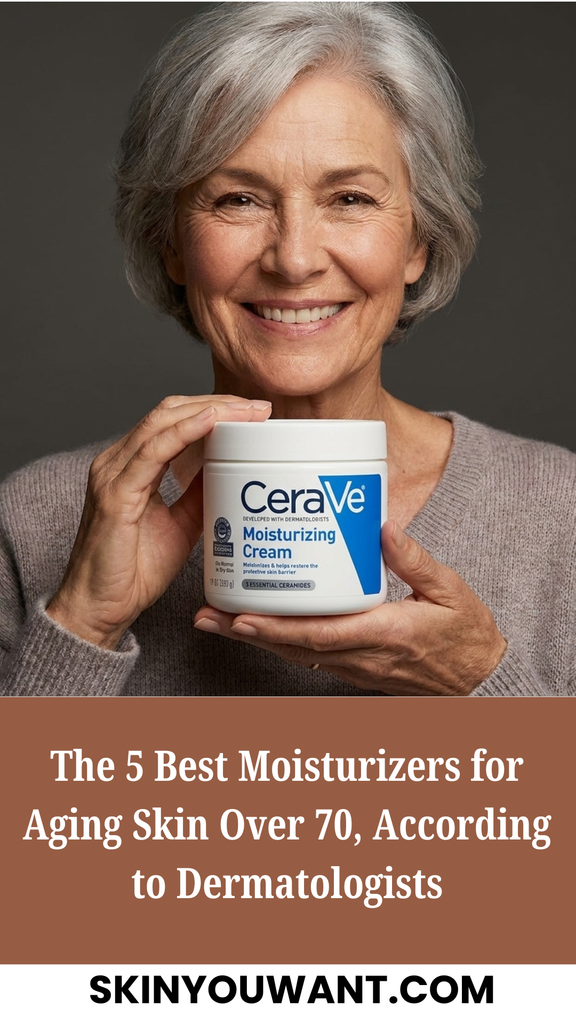
1. CeraVe Moisturizing Cream — Best Overall
CeraVe Moisturizing Cream sits at the top of this list because it does the fundamentals better than almost anything else on the market, and it does so at a drugstore price. The formula includes three essential ceramides, hyaluronic acid, and CeraVe’s patented MVE delivery technology, which releases moisture gradually over 24 hours instead of all at once.
Dermatologists like it for a simple reason: it treats the skin barrier as the priority, not an afterthought. The cream is thick without feeling greasy, and it absorbs at a pace that works well for daily use on the face, hands, and body. It also carries the National Eczema Association’s Seal of Acceptance, which speaks to how gentle the formula is for sensitive, reactive, or thinning skin.
What Amazon reviewers say: Feedback on this product is remarkably consistent across thousands of reviews. Many users in their 60s, 70s, and beyond report that flaky patches on the hands and lower legs clear up within one to two weeks of regular use. Reviewers frequently highlight how well it layers under makeup or sunscreen without pilling, and several mention that a single jar lasts for months because a small amount goes a long way. A common theme among older reviewers is relief that a fragrance-free formula finally stopped triggering itching or redness that pricier creams caused.
Best for: Anyone who wants dermatologist-level barrier repair without a luxury price tag.
2. La Roche-Posay Toleriane Double Repair Face Moisturizer
La Roche-Posay built this moisturizer specifically around barrier repair and microbiome support, and dermatologists cite it often for exactly that reason. The formula combines ceramides, niacinamide, and glycerin, plus prebiotic thermal spring water that helps calm and rebalance stressed, sensitive skin.
What sets this one apart is the texture. It feels lighter than a typical ceramide cream, so it works well for people who find heavier creams too rich for daytime wear. It still delivers meaningful hydration, though, thanks to glycerin’s ability to pull water into the skin and hold it there throughout the day.
What Amazon reviewers say: Reviewers consistently praise how quickly this cream absorbs, noting that it never leaves a greasy film even in humid weather. Several longtime users mention switching from thicker creams because this formula felt just as hydrating but far more comfortable under makeup. Reviewers with rosacea-prone or easily irritated skin also report fewer flare-ups after switching to this moisturizer, which lines up with its reputation as one of the gentler options for reactive, aging skin.
Best for: Sensitive or easily irritated skin that still needs serious hydration.
3. SkinCeuticals Triple Lipid Restore 2:4:2
This one sits at the premium end of the list, and the price reflects a genuinely different formulation strategy. Instead of relying on a single moisture-locking ingredient, SkinCeuticals built this cream around a precise 2:4:2 ratio of ceramides, cholesterol, and fatty acids the same three lipids that naturally exist in healthy skin.
Because it mirrors the skin’s own composition so closely, the formula tends to work fast on visibly compromised skin, including skin that has thinned significantly with age or become more fragile after years of sun exposure. Vitamin E rounds out the formula, adding antioxidant protection against everyday environmental stress.
What Amazon reviewers say: Reviewers in their 70s and 80s frequently describe a noticeable improvement in skin firmness and elasticity within a few weeks. Several mention that fine lines around the forehead and cheeks appeared softer and less pronounced, likely from the plumping effect of restored hydration. Reviewers also comment on how well it blends into skin despite its rich texture, and many say it replaced two or three other products in their routine since it handles hydration, barrier repair, and antioxidant protection all at once.
Best for: Mature skin that needs intensive repair and is worth the investment.
4. COSRX The Ceramide Skin Barrier Moisturizer
COSRX built a strong reputation on straightforward, effective formulas, and this moisturizer fits that pattern well. It leans on ceramides and a blend of soothing plant-based ingredients to rebuild the skin barrier without unnecessary extras. The texture sits between a lotion and a cream, so it works for people who want strong hydration without a heavy finish.
Dermatologists have increasingly pointed to this option as a value-friendly alternative to pricier ceramide creams, since the ingredient list holds up well against far more expensive competitors. It also skips common irritants like added fragrance and harsh alcohols.
What Amazon reviewers say: Many reviewers mention using this cream after trying — and being disappointed by — thicker, more expensive creams that felt suffocating on aging skin. They describe this formula as hydrating enough for cold, dry months but light enough for daily year-round use. Several older users specifically note that it calmed persistent redness on the cheeks and nose within a few weeks, and that the price allows them to reapply generously without worrying about running out too fast.
Best for: Anyone who wants strong ceramide hydration on a tighter budget.
5. Cetaphil Moisturizing Cream
Cetaphil earns its spot through decades of dermatologist trust, and this cream remains one of the most recommended options for very dry, sensitive, or mature skin. The formula centers on glycerin and panthenol, both of which draw and hold moisture, while staying free of fragrance, parabens, and other common irritants.
It is not the most advanced formula on this list, but that simplicity is exactly why so many dermatologists still recommend it. Skin that reacts to almost everything else often tolerates Cetaphil without issue, which matters when skin has become thinner and more reactive with age.
What Amazon reviewers say: Reviewers consistently describe this cream as their go-to for extremely dry or sensitive skin that reacts to nearly every other product. Several mention using it after chemotherapy, surgery, or other medical treatments that left their skin unusually fragile, and report that it calmed irritation quickly. Others simply value its predictability: no fragrance, no stinging, and no surprises after decades of use.
Best for: Very sensitive or reactive skin that needs a fragrance-free, no-fuss formula.
What is the number one anti-aging face cream?
There is no single anti-aging face cream that is best for everyone, but retinol cream is widely considered one of the most effective choices for reducing visible signs of aging. Two notable brands worth considering are Olay and CeraVe. Olay’s Retinol24 products combine retinol with hydrating ingredients and are designed to target wrinkles while keeping skin moisturized.
CeraVe also offers retinol products with ceramides and hyaluronic acid, making them a good option for mature or dry skin. If your skin is sensitive, start slowly by applying retinol a few nights per week. During the day, use SPF 30 or higher to protect your skin from further sun damage. The best choice ultimately depends on your skin type and tolerance.
Which is better for older skin, collagen or retinol?
Retinol is generally better than collagen for older skin if your main goal is to reduce fine lines, wrinkles, uneven texture, and signs of sun damage.
- Retinol: Helps encourage collagen production within the skin, smooths texture, and can visibly reduce wrinkles over time.
- Collagen creams: Mainly moisturize and temporarily improve the skin’s appearance. Collagen applied topically does not penetrate deeply enough to replace lost collagen.
Final Thoughts on Choosing the Right Moisturizer
Skin over 70 needs more than surface-level hydration; it needs a formula that actively rebuilds the barrier and holds moisture in place. CeraVe Moisturizing Cream earns the top spot because it balances proven ingredients, gentle formulation, and an accessible price point better than almost anything else available.
That said, the “best” moisturizer often comes down to your specific skin concerns. Sensitive, reactive skin tends to do well with La Roche-Posay or Cetaphil, while skin that needs intensive repair may benefit more from SkinCeuticals’ concentrated lipid formula. Budget-conscious shoppers should not overlook COSRX, since it delivers real barrier-repair ingredients without the premium price tag.
Whichever option you choose, consistency matters more than any single ingredient. Applying a barrier-repairing moisturizer twice daily, especially right after washing your face or showering, gives your skin the best chance to hold onto hydration and stay comfortable through every season.
Other Related Articles
The 5 Best Foundations for a 60-Year-Old Woman, According to Makeup Artists