Sensitive skin does not slow down as you age; it gets louder. Redness shows up faster. Products that once felt fine start to sting. A rich cream that promises overnight miracles can leave your cheeks blotchy by morning instead. That mix of thinning skin and heightened reactivity puts older, sensitive skin in its own category, one that needs more than a basic “anti-aging” label on the jar.
Dermatologists tend to agree on a short list of ingredients that actually help: ceramides, glycerin, niacinamide, and centella asiatica, all wrapped in a fragrance-free formula. Below, you will find five face creams that check those boxes, every one of them available on Amazon, along with real feedback from people who have already put them through the paces.
What Makes a Face Cream Safe for Sensitive, Aging Skin?
Sensitive skin reacts to more than fragrance. Alcohol, certain preservatives, and even some plant extracts can trigger stinging or redness, especially once the skin barrier has thinned with age. Because of this, dermatologists usually steer people toward short ingredient lists built around barrier-repair, not trend-driven actives.
Ceramides and ghee-like emollients help rebuild that barrier from the outside. Glycerin and hyaluronic acid pull water into the skin without irritating it. Niacinamide calms redness while also supporting elasticity, so it does double duty for aging, reactive skin. Meanwhile, centella asiatica (also called cica) has become a dermatologist favorite for soothing inflammation without the greasy feel older creams used to have.
A product labeled “fragrance-free” matters more than one labeled “unscented,” since unscented products can still contain masking fragrances that trigger a reaction. Always patch-test a new cream on your inner arm first, especially if your skin has reacted to products before.
How Do You Choose Between These Ingredients?
Every sensitive-skin cream on this list solves a slightly different problem, so the right pick often comes down to your specific triggers. If redness and flushing bother you the most, look for niacinamide and centella asiatica first, since both calm inflammation directly. If tightness and flaking dominate, prioritize ceramides and glycerin instead, because those two rebuild moisture from within the skin rather than sitting on the surface.
Texture matters just as much as ingredients. A cream that feels too rich can trap heat and worsen redness for some people, while a lightweight lotion may not deliver enough hydration for very dry, aging skin. Because reactions vary so much from person to person, dermatologists usually recommend starting with the simplest formula on this list and building up from there if your skin tolerates it well.
Why Do Dermatologists Trust These Five Brands Specifically?
Each product below has a long history of dermatologist recommendations, not just a marketing claim slapped on the label. Several carry the National Eczema Association’s Seal of Acceptance, which requires a formula to pass independent review for irritation potential. Others come directly from dermatologist-founded brands or have been studied in published clinical research.
We also cross-checked ingredient lists against what allergists and dermatologists flag as common sensitizers, ruling out anything with added fragrance, drying alcohols, or harsh sulfates. Every product made this list because it combines gentle formulation with ingredients that genuinely support aging skin, not because it topped a sponsored roundup.
What Are The Best Face Creams for Sensitive Aging Skin, According to Dermatologists
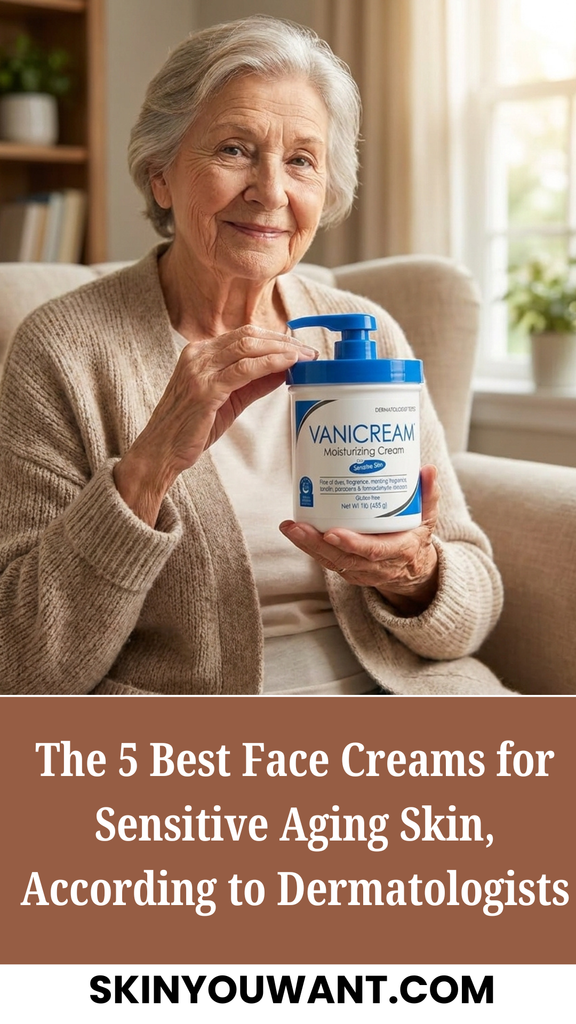
1. Vanicream Moisturizing Cream — Best Overall
Vanicream built its entire reputation around one idea: skip anything that could possibly irritate. This cream contains no fragrance, no masking fragrance, no dyes, no lanolin, and no formaldehyde releasers. Dermatologists frequently recommend it for eczema, rosacea, and general sensitivity because it delivers real hydration without the long ingredient list that usually comes with it.
The formula relies on simple humectants and emollients, including glycerin and white petrolatum, to lock moisture into the skin. It carries the National Eczema Association’s Seal of Acceptance, which places it among the most rigorously vetted options for reactive skin. For aging skin specifically, that simplicity becomes an advantage, since thinner, more fragile skin barriers tend to tolerate minimal formulas better than complex ones.
What Amazon reviewers say: Reviewers across the country consistently mention switching to this cream after reacting to nearly every other moisturizer on the shelf. Many describe using it after a dermatologist recommendation for rosacea or eczema flare-ups, and report that redness calmed down within a week or two of daily use. Several older reviewers specifically note that it works well on thin, crepey skin around the eyes and neck without causing the stinging that pricier creams triggered.
Best for: Highly reactive, easily irritated skin that needs the simplest possible formula.
2. La Roche-Posay Toleriane Double Repair Face Moisturizer
La Roche-Posay designed this cream around barrier repair and microbiome support, which makes it a strong fit for sensitive, aging skin. The formula combines ceramides, niacinamide, and glycerin, along with the brand’s signature prebiotic thermal spring water. Dermatologists often recommend it because it delivers meaningful hydration without feeling heavy or occlusive.
Niacinamide plays a key role here, since it calms redness while also supporting the skin’s natural elasticity over time. That combination makes this cream useful for people managing both sensitivity and visible signs of aging at once, rather than choosing one concern to prioritize over the other.
What Amazon reviewers say: Reviewers frequently highlight how quickly this cream absorbs without leaving a greasy or tacky finish, even in humid weather. Multiple users with rosacea or generally reactive skin report fewer flare-ups after switching from richer, more fragranced creams. Several longtime users also mention noticing softer, calmer-looking skin around the nose and cheeks within a few weeks of consistent use.
Best for: Sensitive skin that also wants visible anti-aging support.
3. Cetaphil Rich Hydrating Cream
Cetaphil earned dermatologist trust decades ago, and this cream continues that legacy for sensitive, aging skin. The formula centers on hyaluronic acid and glycerin, both of which draw moisture into the skin and hold it there throughout the day. It skips fragrance, parabens, and other common irritants, which matters more as skin becomes thinner and more reactive with age.
Because the formula stays relatively simple, it tends to work well for people who have already reacted to more “active-packed” anti-aging creams. Dermatologists often suggest it as a starting point for patients who are not sure which specific ingredient triggers their sensitivity.
What Amazon reviewers say: Reviewers describe this cream as their reliable option after trying and rejecting several higher-end brands that caused stinging or breakouts. Many mention using it following a cosmetic procedure, sunburn, or medical treatment that left their skin unusually fragile, and note it calmed things down without further irritation. Others simply appreciate the predictability of a formula that has not changed much over the years.
Best for: Sensitive skin that wants a fragrance-free, dependable, no-fuss option.
4. Aveeno Calm + Restore Nourishing Cream
Aveeno built this cream specifically for stressed, reactive skin, and it leans on colloidal oatmeal and feverfew extract to calm inflammation. Both ingredients have a long history in dermatology for soothing redness and irritation, which makes this cream a solid pick for aging skin that flushes or reacts easily to weather changes and product switches.
The texture stays lightweight despite the hydration it delivers, thanks to a blend of ceramides and ceramide-supporting lipids. Dermatologists tend to recommend it for people who want visible calming benefits without the heaviness of a traditional barrier-repair cream.
What Amazon reviewers say: Reviewers often mention this cream calming visible redness within days, particularly around the cheeks and nose. Several describe pairing it with other sensitive-skin products in their routine without issue, since the formula plays well with minimal, fragrance-free regimens. Multiple users in their 60s and 70s specifically note that it eased persistent dryness during winter months without triggering their usual sensitivity.
Best for: Skin that flushes easily and needs a calming, lightweight formula.
5. SkinCeuticals Triple Lipid Restore 2:4:2
SkinCeuticals sits at the premium end of this list, but the formulation strategy explains the price. The cream uses a precise 2:4:2 ratio of ceramides, cholesterol, and fatty acids, mirroring the exact lipid composition found in healthy skin. Because it matches the skin’s own makeup so closely, it tends to work well even on skin that reacts to less-targeted formulas.
Dermatologists frequently recommend it for aging skin that has become visibly compromised, whether from years of sun exposure, harsh products, or simply time. Vitamin E adds antioxidant protection on top of the barrier-repair benefits, giving the formula a dual purpose.
What Amazon reviewers say: Reviewers in their 60s, 70s, and beyond frequently describe noticeable improvements in firmness and texture within a few weeks. Several mention that their skin tolerated this cream better than lower-cost alternatives, likely because the lipid ratio so closely matches skin’s natural composition. Many also note that it replaced multiple products in their routine, since it handles hydration, barrier repair, and antioxidant protection together.
Best for: Sensitive, visibly aging skin that needs intensive, targeted repair.
At what age is it best to start using anti-aging skincare?
The best age to start using anti-aging skincare is in your 20s, but the most important step is protecting your skin from the sun. Daily use of a broad-spectrum SPF 30 or higher can help prevent premature wrinkles, dark spots, and loss of firmness. In your late 20s or early 30s, you can add proven ingredients such as retinol, vitamin C, peptides, and hyaluronic acid based on your skin’s needs.
However, you do not need an expensive or complicated routine. A gentle cleanser, moisturizer, and sunscreen are enough to start. If you are already in your 40s, 50s, or 60s, it is never too late. Consistent skincare can still improve hydration, texture, fine lines, and overall skin appearance.
What is the best night cream for aging skin?
For aging skin, a retinol night cream is one of the best choices because retinol can help reduce fine lines, improve skin texture, and support collagen production while you sleep.
Two notable options are Olay Retinol24 Night Moisturizer and CeraVe Skin Renewing Retinol Serum. Olay is a good choice if you want a richer, moisturizing night treatment, while CeraVe is a good option if you prefer a gentler retinol formula with barrier-supporting ingredients.
If your skin is dry or sensitive, start retinol 2–3 nights a week and use a moisturizer afterward. During the day, always apply SPF 30 or higher, since sun protection is essential for preventing further signs of aging.
Final Thoughts on Choosing a Face Cream for Sensitive, Aging Skin
Sensitive, aging skin needs a cream that respects both problems at once, not one that treats wrinkles while ignoring reactivity, or the reverse. Vanicream takes the top spot because it strips away everything unnecessary and focuses entirely on gentle, effective hydration, which makes it the safest starting point for most sensitive skin types.
That said, your specific triggers matter more than any general ranking. If redness leads your list of concerns, Aveeno Calm + Restore or La Roche-Posay Toleriane may serve you better. If you need intensive repair for skin that has become visibly thin or compromised, SkinCeuticals delivers targeted results worth the investment.
Whichever cream you choose, patch-test it first and give it at least two to three weeks before judging the results. Sensitive skin often needs a little patience, but the right formula, applied consistently, makes a real difference over time.
Other Related Articles
The 5 Best Foundations for a 60-Year-Old Woman, According to Makeup Artists
The 5 Best Moisturizers for Aging Skin Over 70, According to Dermatologists